

How to Build a High-Converting Lead Generation Funnel from Scratch (Step-by-Step)
How to Build a High-Converting Lead Generation Funnel from Scratch (Step-by-Step)
Most marketers build their lead generation funnels backwards. They obsess over ad creatives, pour budget into traffic, and then wonder why their cost per lead keeps climbing while conversion rates flatline. I've spent the last decade helping SaaS companies and DTC brands figure out how to build a high-converting lead generation funnel from scratch, and the pattern I see repeatedly is the same: strategy gets skipped in favor of tactics. This guide is about fixing that. Whether you're starting from zero or rebuilding a broken funnel, what follows is the exact framework I use with clients spending anywhere from $10K to $500K per month on paid acquisition.
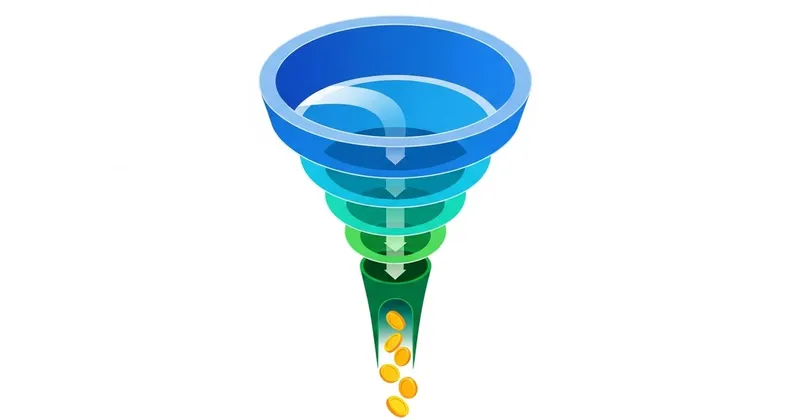
The stakes are real. According to HubSpot's 2023 State of Marketing Report, 61% of marketers rank lead generation as their top challenge. But here's what that stat doesn't tell you: the marketers who struggle aren't failing because lead generation is hard. They're failing because they're optimizing isolated pieces instead of a connected system. A funnel is exactly that: a system. And like any system, every component has to be engineered to work with the one before and after it.
Step 1: Define Your Ideal Customer Profile Before You Touch Any Tool
Before you write a single ad, create a landing page, or choose a CRM, you need surgical clarity on who you're targeting. Not a vague buyer persona with a stock photo and a made-up name, but an Ideal Customer Profile (ICP) built from real behavioral and firmographic data.
How to Build a Data-Driven ICP
Start with your existing customer base if you have one. Pull your top 20% of customers by LTV (lifetime value) and look for patterns:
- Company size and industry (for B2B)
- Job title and decision-making authority
- Primary pain point that drove them to you
- Which channel they came from
- Time to close and deal size
If you're starting from scratch, use tools like Sparktoro to analyze audience behavior, LinkedIn Sales Navigator for firmographic filtering, or Clearbit to enrich your existing data. For consumer brands, Facebook Audience Insights and Google's Market Finder give you demographic and psychographic baselines.
One of my clients, a B2B SaaS company selling project management software to architecture firms, was running campaigns targeted at "project managers in construction." After an ICP audit, we narrowed to "principals and senior architects at firms with 10–50 employees doing over $5M in annual revenue." Cost per qualified lead dropped 43% within 60 days. Same budget, sharper targeting.
Your ICP should answer:
- Who feels the pain most acutely?
- Who has the authority and budget to act?
- What does their decision-making process look like?
- What does "success" mean to them in measurable terms?
Step 2: Map Your Funnel Stages to Buying Intent
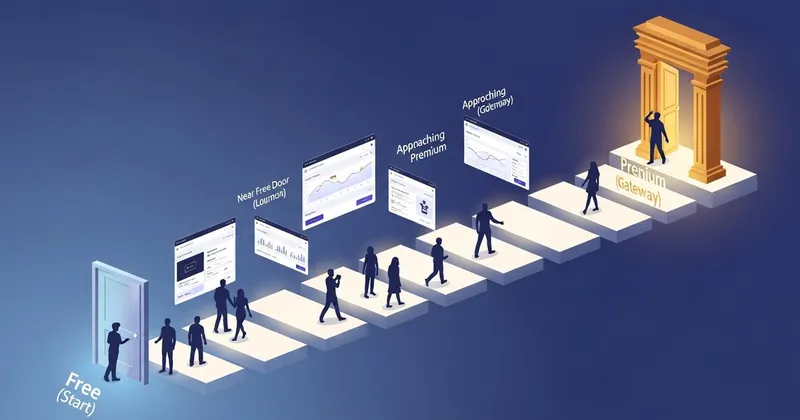
A high-converting funnel is a series of intentional moments that match your messaging to where a prospect is in their decision journey. Most frameworks use three stages: TOFU (top of funnel), MOFU (middle of funnel), and BOFU (bottom of funnel). I prefer a slightly more detailed version for paid acquisition contexts.
The Four-Stage Funnel Framework I Use
1. Awareness (Problem-Aware) The prospect knows they have a problem but may not know solutions exist. Content here should educate, not sell. Think: blog posts, YouTube ads, social proof content, thought leadership.
2. Consideration (Solution-Aware) They're actively researching options. This is where comparison content, webinars, lead magnets, and case studies perform best. Your goal is to capture the lead and begin nurturing.
3. Evaluation (Product-Aware) They know your product exists and are comparing it to alternatives. High-intent territory. Free trials, demos, ROI calculators, and detailed case studies are your conversion levers here.
4. Decision (Purchase-Ready) They're ready to buy but may need a final push, whether that's urgency, social proof, a one-on-one call, or a risk-reversal offer. This stage is where most funnels leave money on the table.
The critical mistake I see constantly is running the same offer and messaging across all four stages. When you serve a demo CTA to someone who just discovered they have a problem, your conversion rate collapses. Forrester Research found that companies that excel at lead nurturing generate 50% more sales-ready leads at 33% lower cost, and that advantage comes entirely from matching the right message to the right stage.
Step 3: Engineer Your Lead Magnet for Maximum Conversion
Your lead magnet is the engine of your funnel. It's the value exchange that converts an anonymous visitor into an identifiable lead. And most lead magnets are catastrophically bad: generic eBooks nobody reads, checklists that provide no real insight, webinars that are thinly veiled sales pitches.
What Actually Converts in 2024
The lead magnets that consistently outperform in my client campaigns share two qualities: specificity and perceived value. Immediacy helps too, but those first two are non-negotiable.
High-converting lead magnet types by conversion rate (based on industry data from Unbounce and Demand Gen Report):
- Interactive tools and calculators: 40–60% opt-in rates (ROI calculators, assessment quizzes)
- Free templates and swipe files: 30–45% opt-in rates when highly specific
- Original research and data reports: 25–40% opt-in rates, extremely high share rates
- Email courses (5–7 days): 20–35% opt-in rates with strong retention
- Traditional eBooks/guides: 10–20% opt-in rates (declining significantly)
For a fintech client targeting CFOs, we replaced a generic "Ultimate Guide to Financial Reporting" with a Custom Benchmarking Report that let prospects input their company size and get industry-specific KPI comparisons. Opt-in rate jumped from 14% to 52%. The content was nearly identical. The format and personalization changed everything.
The Lead Magnet Specificity Rule
The more specific your lead magnet, the higher your lead quality. "How to Reduce SaaS Churn" attracts a broad audience. "The 7-Day Churn Reduction Playbook for B2B SaaS Companies Under $5M ARR" attracts exactly the segment you want and pre-qualifies everyone who opts in.
Specificity also filters out low-quality leads, which matters enormously for your sales team's efficiency and your overall funnel economics.
Step 4: Build Your Landing Page Architecture for Conversion
Traffic without a high-converting landing page is expensive noise. This is where most growth teams underinvest. They'll spend 80% of their time on ad creative and leave landing page optimization as an afterthought.
The Anatomy of a High-Converting Lead Gen Landing Page
Based on data from Unbounce's 2023 Conversion Benchmark Report, which analyzed over 44,000 landing pages across industries, the median landing page conversion rate is just 4.02%. Top-quartile pages convert at 11.45% or higher. The difference comes down to structural and psychological elements, not just design.
Above the fold (the most critical real estate):
- Headline: Outcome-focused, not feature-focused. Lead with what the prospect gets, not what you do.
- Sub-headline: Adds specificity and handles the "how" or "why this works"
- Hero image or video: Shows the product in context or visualizes the transformation
- Primary CTA: One action, high contrast, benefit-driven copy (not "Submit" — never "Submit")
- Trust signals: Logo bar, review count, or a single powerful testimonial
Below the fold:
- Benefits section (4–5 bullets, outcome-focused)
- Social proof block (case study snippet, testimonials with photos and titles)
- Features explained in the context of pain points
- FAQ section (this alone can lift conversions 10–15% by handling objections proactively)
- Secondary CTA with urgency or risk-reversal language
Page Length and Form Fields
For cold traffic (TOFU), shorter pages with minimal form fields outperform long-form pages. Ask for only what you need, typically name and email to start. Reducing form fields from 4 to 2 can increase conversions by up to 50%, according to a landmark study by Imagescape.
For warm or retargeted traffic (MOFU/BOFU), longer pages with more detail and more form fields are appropriate. These prospects are already invested, and additional qualification questions help your sales team and improve lead scoring accuracy.
Step 2: Choose the Right Lead Magnet (Your Funnel's Core Asset)
The lead magnet is the engine of your funnel. It's the value exchange that convinces a stranger to hand over their email address, phone number, or time.
Most lead magnets fail because they're too generic. "Download our free guide" stopped working in 2017. Today's audience knows exactly what they're giving up, and they expect specific, immediate value in return.
High-converting lead magnet formats I've tested:
- Free audit or assessment — Works exceptionally well in B2B. A "30-Second SEO Audit" or "SaaS Pricing Scorecard" converts at 3–5x the rate of a generic ebook.
- Interactive calculator — ROI calculators or CAC/LTV tools perform well because they give personalized, actionable results. HubSpot's Website Grader generates thousands of leads monthly on this principle alone.
- Mini email course — A 5-day sequence teaching one specific skill creates high engagement and trains leads to open your future emails.
- Template library — Particularly effective for marketing, operations, and project management audiences. Notion and Airtable have used this to grow their user bases significantly.
Rule of thumb: Your lead magnet should solve one specific problem in under 10 minutes of effort from the lead.
Step 3: Build a Landing Page That Converts (Not Just Looks Good)
Design is not conversion. I've watched beautiful landing pages with agency-grade visuals pull a 1.2% opt-in rate while a plain, text-heavy page hits 34%. The difference is almost never the aesthetic.
Here's the anatomy of a landing page that actually works:
Headline: Lead with the outcome, not the feature. Instead of "Download Our Marketing Guide," try "Double Your Qualified Leads in 30 Days Without Increasing Ad Spend."
Subheadline: Address the specific pain point and hint at your mechanism. Keep it under 20 words.
Bullet points (3–5): Benefit-driven copy that answers "what's in it for me?" Each bullet should be specific and tangible.
Social proof: Include logos, testimonials, or data points above the fold. According to Nielsen, 92% of consumers trust peer recommendations over brand content.
CTA button: Be specific. "Get My Free Audit" outperforms "Submit" by an average of 14.79%, according to Unbounce data.
Form fields: The fewer, the better. Removing one field can increase conversions by up to 26%. For cold traffic, ask only for name and email, then qualify further in the nurture sequence.
I always run a 5-second test before launching any landing page. If someone can't tell what the page is offering within five seconds of landing on it, start over.
Step 4: Drive Targeted Traffic Using a Paid + Organic Stack
A perfect funnel with no traffic is a ghost town. Here's how I structure the traffic strategy:
Paid acquisition (top of funnel):
- Meta Ads — Best for B2C and prosumer audiences. Use lead generation campaigns with Instant Forms for lower CPLs, or drive to landing pages for higher-intent leads.
- Google Search Ads — Ideal for capturing demand that already exists. Target high-intent keywords like "best [tool category]" or "[problem] solution."
- LinkedIn Ads — Worth it for B2B despite the cost. Yes, CPCs average $6–$12, but the targeting by job title, company size, and industry is unmatched. Sponsored content and Lead Gen Forms consistently outperform other placements.
Benchmarks worth knowing:
- Average landing page conversion rate across industries: 2.35% (Wordstream)
- Top 25% of landing pages convert at 5.31% or higher
- Best-in-class funnels I've built convert cold paid traffic at 12–18%
Organic (middle and bottom of funnel):
- SEO-driven blog content that answers pain-point queries, with inline CTAs pointing to your lead magnet
- LinkedIn posts that demonstrate authority and drive profile traffic
- Retargeting campaigns for visitors who didn't convert on first visit (these consistently deliver 2–3x better ROI than cold campaigns)
Step 5: Build an Automated Nurture Sequence That Closes
Most marketers treat lead magnet delivery as the end of the funnel. It's actually the beginning.
The moment someone opts in, they're at peak interest. Your job is to maintain and deepen that interest through a well-designed email nurture sequence.
My 7-email nurture framework:
- Email 1 (Immediate): Deliver the lead magnet and set expectations for what's coming
- Email 2 (Day 1): Share a quick win they can implement today — builds credibility fast
- Email 3 (Day 2): Address the single biggest objection your audience has about solving their problem
- Email 4 (Day 3): A case study or data-backed success story from a customer like them
- Email 5 (Day 5): Soft pitch — introduce your product or service as the natural next step
- Email 6 (Day 7): Handle objections directly (price, time, complexity)
- Email 7 (Day 9): Hard CTA with urgency or a limited-time incentive
According to Campaign Monitor, email marketing delivers an average ROI of $42 for every $1 spent. This is where your funnel compounds.
Use ActiveCampaign, Klaviyo (for e-commerce), or HubSpot to automate this sequence and trigger behavioral emails based on clicks and page visits.
Step 6: Optimize With Data, Not Gut Feelings
A funnel is never finished. The brands that win treat theirs as a living system that gets smarter over time.
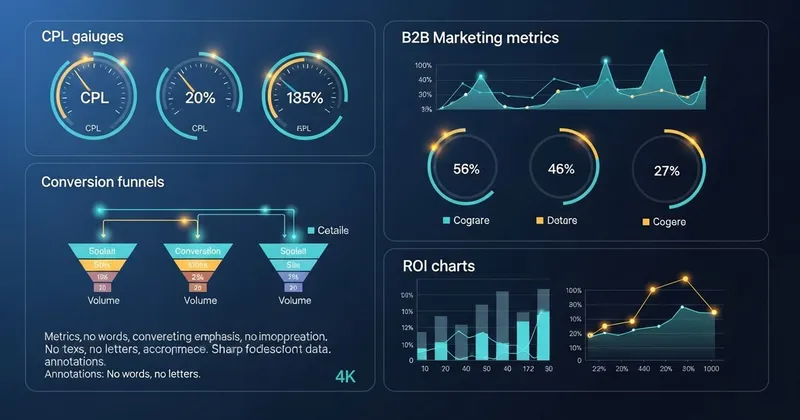
Key metrics to track at every stage:
| Funnel Stage | Metric | Benchmark |
|---|---|---|
| Ads | CTR | 1–3% (Meta), 3–8% (Google) |
| Landing Page | Opt-in Rate | 20–35% (warm), 5–15% (cold) |
| Email Sequence | Open Rate | 35–50% (B2B) |
| Email Sequence | Click Rate | 3–7% |
| Sales/Demo | Close Rate | 15–30% (qualified leads) |
Run A/B tests continuously, but test one variable at a time. Start with headline variations on your landing page, then move to CTA copy, then email subject lines.
Use heatmapping tools like Hotjar or Microsoft Clarity to see where users drop off. Session recordings will show you problems that analytics dashboards never will. I've killed entire funnel sections based on a single recording that showed users repeatedly clicking something that wasn't a link.
Every quarter, run a full funnel audit:
- Where is the biggest drop-off point?
- Which traffic source brings the highest-converting leads?
- Which emails have the lowest engagement, and why?
Small, consistent improvements add up fast. Moving your landing page from 8% to 12% opt-in rate, a 50% relative gain, can double your total pipeline without spending an extra dollar on ads.
Conclusion: Build the System, Then Scale It
A high-converting lead generation funnel isn't a one-time project. Once built correctly, it becomes one of your most valuable business assets.
To recap the six steps:
- Define your ICP with precision — know exactly who you're building for
- Choose a lead magnet that solves one specific problem immediately
- Build a landing page that leads with outcomes and removes friction
- Drive traffic through a paid and organic stack built for your audience
- Nurture leads with an automated sequence that builds trust and drives action
- Optimize continuously using real data, not assumptions
The businesses I've seen grow fastest aren't the ones with the biggest budgets. They're the ones with the most dialed-in systems. They test faster, learn faster, and iterate faster.
Your funnel is only as strong as its weakest link. Find that link. Fix it. Then find the next one.
Ready to build your lead generation funnel the right way?
If you want a personalized audit of your current funnel — or a done-with-you build from scratch — book a free 30-minute strategy call and let's map out your growth system together. No pitch, no pressure. Just a clear plan you can execute immediately.
— Sarah Chen
Found this guide useful? Share it with a founder or marketer who needs to hear it. And follow me on LinkedIn for weekly breakdowns on growth, paid acquisition, and SaaS scaling.
Free Business Starter Checklist
Get our proven checklist covering idea validation, market research, and launch planning.