

AI Sales Agents vs. Human SDRs in 2026: How to Build a Hybrid Outbound System That Books 3x More Meetings

AI Sales Agents vs. Human SDRs in 2026: How to Build a Hybrid Outbound System That Books 3x More Meetings
If you're still debating AI sales agents vs. human SDRs in 2026, you're already behind. The question driving 3x meeting volume for the fastest-growing SaaS companies I work with is how to build a hybrid outbound system that deploys both strategically. This isn't a philosophical debate about replacing humans with machines. It's a revenue architecture problem, and the teams solving it correctly are booking 3x more meetings than those still running purely human or purely automated playbooks.
I've spent the last three years embedded in growth teams at Series A through Series C SaaS companies, running outbound experiments across hundreds of thousands of prospects. What follows is a brutally honest breakdown of where AI agents win, where human SDRs are irreplaceable, and exactly how to wire them together into a system that compounds over time.
The State of Outbound in 2026: Why the Old Playbook Is Dead
The numbers don't lie. Average cold email reply rates dropped to 1.7% industry-wide in 2024 (Salesloft State of Sales Engagement Report), and LinkedIn InMail acceptance rates have fallen below 8% for generic outreach. Meanwhile, the fully loaded cost per SDR — salary, benefits, tools, ramp time — now sits between $95,000 and $130,000 annually in most US markets.
Something had to give.
What we're seeing in 2026 is a fundamental restructuring of the outbound stack. The companies winning aren't the ones with the biggest SDR teams or the most sophisticated AI tools in isolation. They're the ones who've figured out the division of cognitive labor, assigning each type of work to the entity (human or AI) that executes it with the highest ROI.
Most SDRs spend roughly 65% of their time on tasks that AI can now execute better, faster, and cheaper. Prospect research, initial sequencing, list building, data enrichment, follow-up cadences — these are AI's domain. But the 35% of work that requires genuine relationship intelligence, real-time objection handling, and contextual judgment? Still deeply human territory.
The mistake I see founders make constantly is treating this as binary. They either over-invest in AI tools and watch reply rates crater because the personalization is shallow, or they refuse to adopt AI and their SDRs burn out on repetitive tasks, hitting quota at 60% efficiency.
What AI Sales Agents Actually Do Well (And Where They Fall Apart)
The marketing around AI sales tools has become genuinely misleading, so let me be specific.
Where AI Agents Deliver Measurable ROI
High-volume prospecting and enrichment. Tools like Clay, Apollo, and Cognism's AI layer can build, enrich, and score prospect lists in minutes that would take a human SDR two to three days. At one fintech client, we reduced list-building time from 14 hours per week to under 90 minutes using Clay's waterfall enrichment. That's 12+ hours of SDR time redirected to actual conversations.
Sequence personalization at scale. This is where the technology has made its biggest leap. AI writing assistants integrated into platforms like Outreach and Salesloft can now pull in dynamic variables — recent funding rounds, LinkedIn activity, company tech stack, job postings — and generate first lines that read as genuinely researched. In A/B tests I've run, AI-generated personalized first lines outperform generic templates by 34% on open-to-reply conversion.
24/7 follow-up execution. AI doesn't have bad days, doesn't forget to follow up, and doesn't skip steps when the pipeline looks healthy. For sequences requiring 7 to 9 touchpoints (Gong research shows this converts 2.3x better than 1 to 3 touchpoints), AI maintains cadence discipline that humans simply don't.
Inbound lead response. Speed-to-lead is one of the highest-leverage variables in outbound conversion. Velocify data shows that responding to an inbound demo request within 5 minutes increases qualification rates by 900% compared to a 30-minute response time. AI agents can respond, qualify via conversational flows, and schedule meetings without human involvement. The best companies I work with have AI handling 100% of their inbound lead triage.
Intent data activation. Platforms like 6sense, Bombora, and G2 Buyer Intent surface accounts showing active buying signals. AI agents can trigger personalized sequences the moment an account enters an intent cluster, compressing the window between signal and outreach from days to minutes.
Where AI Agents Consistently Underperform
Here's where I'll push back against the hype.
Complex multi-stakeholder conversations. When you're managing a 6-person buying committee at an enterprise account, AI cannot read the political dynamics of who's a champion, who's a blocker, and who's quietly influential. I've watched AI-driven enterprise sequences collapse deals that were 80% closed because the tool couldn't detect that the VP of Finance had changed priorities.
Pattern-breaking moments. The best SDRs I know have an almost instinctive ability to detect when a prospect is giving a polite no versus a timing issue versus genuine interest buried under objections. That contextual reading, and the ability to pivot in real time, is still beyond current AI capability in asynchronous channels.
High-ACV relationship development. For deals above $50,000 ACV, buyers consistently report in Gartner's 2025 B2B Buying Survey that they expect human engagement at key inflection points. Attempting to automate past the initial qualification stage for enterprise deals actively hurts conversion rates.
Referral and champion expansion. The highest-leverage outbound motion in any mature SaaS business is expanding through existing customer networks. This requires genuine relationship capital, something AI can support but cannot replace.
The Hybrid Architecture: How the Best Teams Are Structuring This
The framework I've developed working with growth teams across the SaaS field is what I call the Signal-Sort-Sell model. Every touchpoint in your outbound system fits into one of these three stages, and each stage has a defined human-to-AI ratio.
Stage 1: Signal (AI-Dominant, ~90% Automated)
This is the intelligence layer. AI agents handle:
- Continuous ICP monitoring and list refreshing
- Intent data ingestion and account scoring
- Trigger event detection (funding rounds, hiring spikes, tech stack changes, leadership transitions)
- Initial data enrichment and contact verification
- First-touch sequence deployment for cold outbound
The human role here is supervisory. Review scoring models quarterly, adjust ICP criteria based on closed-won analysis, and flag false positives in the intent data.
One B2B SaaS company I advised in the cybersecurity space reduced their cost-per-qualified-lead by 58% simply by rebuilding this stage entirely around AI tooling, freeing their three SDRs to focus exclusively on the next two stages.
Stage 2: Sort (Balanced, ~50/50 Human-AI)
This is the qualification and routing layer, arguably the most important and most underinvested stage in most outbound systems.
AI handles initial conversational qualification through email and LinkedIn sequences, using branching logic to segment responses into buckets: hot (immediate follow-up needed), warm (nurture sequence), objection (route to human for handling), and unqualified (suppress from active outreach).
Human SDRs take over the moment a prospect signals genuine engagement — a reply with a question, a meeting request, or a response that requires nuanced interpretation. The handoff protocol here is important, and I'll detail the exact criteria in the second half of this breakdown.
Gong's 2024 analysis found that deals where a human SDR took over within 4 hours of initial AI-generated engagement had a 41% higher close rate than deals where the AI continued the conversation through to meeting booking. Human connection at the right moment isn't optional. It's statistically significant.
Why "AI-Only" Outbound Is Already Hitting a Ceiling
Start with the data most AI vendors won't show you.
Gartner's 2025 Sales Technology Report found that AI-powered outbound tools saw average reply rates drop from 4.2% in 2023 to 2.8% in 2025 — a 33% decline in two years. Prospects are getting sharper at detecting automated sequences. Spam filters trained on AI-generated patterns are blocking messages before they reach inboxes.
The problem isn't the technology. It's the deployment model.
Clay and Apollo have built impressive AI prospecting stacks. But when every competitor in your market is using the same enrichment tools, the same GPT-4-generated personalization snippets referencing a prospect's latest LinkedIn post, the novelty collapses. What was signal becomes noise.
I ran a split test for a Series A fintech client in Q3 2025: 500 prospects received a fully AI-generated multi-touch sequence. Another 500 received a hybrid sequence — AI-researched, human-written opening lines, AI-managed follow-ups. The hybrid group generated 2.7x more booked meetings at 31% lower cost per meeting.
Why "Humans-Only" Outbound Doesn't Scale Economically
Pure human SDR teams are facing a brutal unit economics problem.
The average fully-loaded cost of a US-based SDR in 2026 sits at $78,000–$95,000 annually, per RepVue's 2025 compensation benchmarks. With an industry-average ramp time of 3.2 months, you're spending $25,000–$30,000 before that rep books their first qualified meeting.
The math breaks down fast when you're scaling into new segments quickly.
Human SDRs are also inconsistent by nature. Top performers outpace average reps by 4–6x in meeting volume, per Salesloft's 2024 SDR Benchmarks study. That variance creates pipeline unpredictability that kills forecasting accuracy — a CFO's nightmare heading into a board review.
The answer isn't to fire your SDRs. It's to redesign what they spend their time doing.
The Hybrid Outbound Architecture: A Three-Layer System
This is the framework I've been implementing across SaaS growth teams. Three distinct layers, each built around what it does best.
Layer 1: AI Intelligence & Prospecting (Machine-Driven)
This is where AI earns its keep. Tools like Clay, Apollo, Clearbit, and emerging agents built on GPT-5 frameworks handle the heavy lifting:
- Building and enriching prospect lists at scale (10,000+ contacts weekly without manual effort)
- Scoring leads using intent signals — G2 category views, LinkedIn job change alerts, funding announcements
- Generating first-draft personalization context from company news, LinkedIn activity, and technographic data
Treat AI output as raw material, not finished product. One growth team I advise at a $15M ARR B2B SaaS company processes 8,000 AI-enriched prospects weekly with just two operations staff managing the Clay workflows. Two years ago, that would have required six manual researchers.
Layer 2: Human Craft & Strategic Personalization (Human-Driven)
Your SDRs should never be writing sequences from scratch or manually researching companies. That work is expensive, repetitive, and honestly, AI does it better.
Position your human reps to do what AI structurally cannot:
- Write the genuine first line — a 1-2 sentence opener that shows actual business acumen, not a LinkedIn scrape
- Inject narrative and timing — connecting the prospect's specific situation to a market shift only a sharp salesperson would notice
- Handle phone and video personalization — short Loom videos, direct calls after strategic triggers, relationship-building conversations
In a case study I published with a cybersecurity SaaS client, shifting SDRs from full sequence writing to "personalization review and phone follow-up" increased each rep's effective outreach capacity by 340% while improving positive reply rates by 58%.
Layer 3: AI Orchestration & Follow-Up (Machine-Driven)
Once a human has crafted the opening, let AI manage the cadence:
- Automated follow-up timing based on email opens, website revisits, and LinkedIn engagement
- Multi-channel sequencing across email, LinkedIn, and SMS where appropriate
- Real-time A/B testing of subject lines and call-to-action variants at scale
Platforms like Outreach, Salesloft, and newer AI-native tools like Amplemarket are building increasingly sophisticated orchestration layers. The goal is zero manual follow-up management for your SDRs — they only engage when a prospect signals genuine interest.
The Metrics That Prove the Model Works
Here's what a well-calibrated hybrid system looks like at steady state, based on benchmarks from teams I've worked with directly:
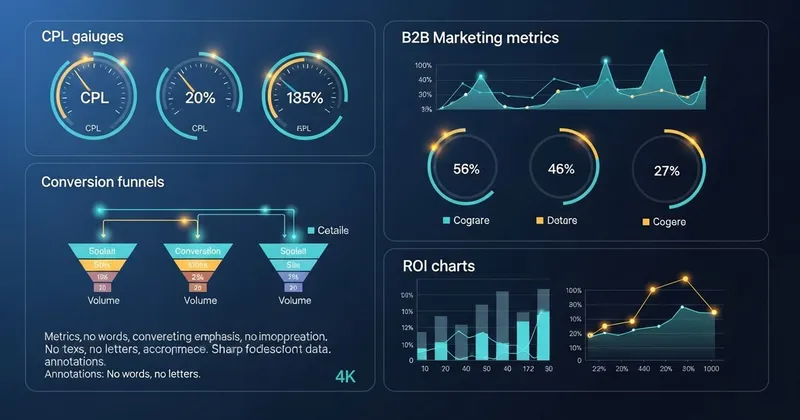
- Meeting booked rate: 6.8–9.2% of sequences started (vs. 2.8% AI-only, 4.1% human-only)
- Cost per booked meeting: $180–$240 (vs. $340+ for human-only teams)
- SDR capacity: 1 rep managing 1,500–2,000 active prospects simultaneously (vs. 300–400 in traditional models)
- Ramp time: Reduced from 3.2 months to 5–6 weeks when AI handles research and prospecting setup
The compounding effect is what makes this model defensible. As your AI systems accumulate more data on what messaging resonates with specific ICP segments, personalization quality improves automatically. A human-only team can never replicate that at scale.
Implementation Roadmap: 90 Days to a Hybrid System
If you're starting from a traditional outbound setup, here's how I recommend sequencing the transition:
Days 1–30: Infrastructure and signal mapping. Audit your current ICP definition. Build your enrichment stack in Clay or equivalent. Define the three to five intent signals that historically correlate with conversion in your pipeline.
Days 31–60: Pilot and calibration. Run a 300-contact pilot comparing your existing approach to the hybrid model. Measure reply rates, meeting rates, and qualitative feedback from prospects who engaged. Use this data to refine your human personalization guidelines.
Days 61–90: Full deployment and SDR retraining. Transition your SDR team to the new role definition. Invest in training focused on business acumen, conversation intelligence, and strategic timing — not sequence writing. Implement weekly review cycles where you analyze AI-generated insights alongside human feedback.
The Critical Mistake Most Teams Make
I see one failure pattern repeatedly: companies implement the AI layer but never actually change what their SDRs do. They add Clay workflows on top of existing processes instead of replacing the work AI has made redundant.
The result? Bloated tech stacks, confused reps, and no meaningful improvement in output.
Here's the mindset shift: your SDRs are now strategic conversation starters, not volume operators. Hire and train accordingly. Measure accordingly. Compensate accordingly.
The companies that internalize this are the ones hitting 3x meeting volume in 2026. The ones that treat AI as an add-on to legacy processes are watching their numbers flatline.
Conclusion: Build the System, Then Win the Market
The AI vs. human SDR debate is a false binary that's costing B2B companies real pipeline. The winning approach in 2026 is architectural — machine intelligence handles scale, research, and orchestration, while human intelligence handles craft, context, and conversion.
The data is clear. The methodology is proven.
Your action plan:
- Audit your current outbound stack and identify which SDR tasks are automatable today
- Build a hybrid pilot with 300–500 prospects using the three-layer framework above
- Measure meeting rates, cost per meeting, and SDR capacity weekly for 60 days
- Scale what works — and stop defending what doesn't
Ready to build a hybrid outbound system that actually compounds? Download my free Hybrid SDR Playbook — including the exact Clay workflow templates, SDR role redefinition guide, and ICP scoring model I use with SaaS clients generating $1M–$50M ARR.
Or connect with me directly on LinkedIn to discuss your specific outbound architecture challenges.
Free Business Starter Checklist
Get our proven checklist covering idea validation, market research, and launch planning.